Helpful Material to Understand: CRPS, POTS, and TBIs
What's CRPS?
CRPS, or Complex Regional Pain Syndrome, is a chronic pain condition that significantly impacts the nervous system. It typically develops after an injury or trauma, but the pain experienced is disproportionately severe compared to the initial event. It's as if the body's alarm system remains stuck in the 'on' position, continuously sending pain signals.
Living with CRPS may look like:
Living with CRPS is honestly the hardest thing I have ever had to endure. And I say that as someone who has taken a field hockey ball straight to the eye, so trust me, I have a reference point for pain.
There were days where my fingers were completely useless. Not sore, not inconvenient, completely useless. I had to use my palms to pick things up, open door knobs, and even drive my car. Things you never think twice about become this whole production and you just have to figure it out because life doesn't stop.
The hardest part though wasn't even the physical pain. It was the mental side of it. I constantly felt like I was being dramatic. Like maybe I was just a cry baby who couldn't handle it. When you're in that much pain for that long and people around you can't see it, you start to question yourself. And that self doubt on top of the actual pain is its own kind of exhausting.
CRPS is real, it is debilitating, and it is so frequently misunderstood. If you are living with it, you are not being dramatic. You are not weak. You are dealing with something that most people could not even imagine.
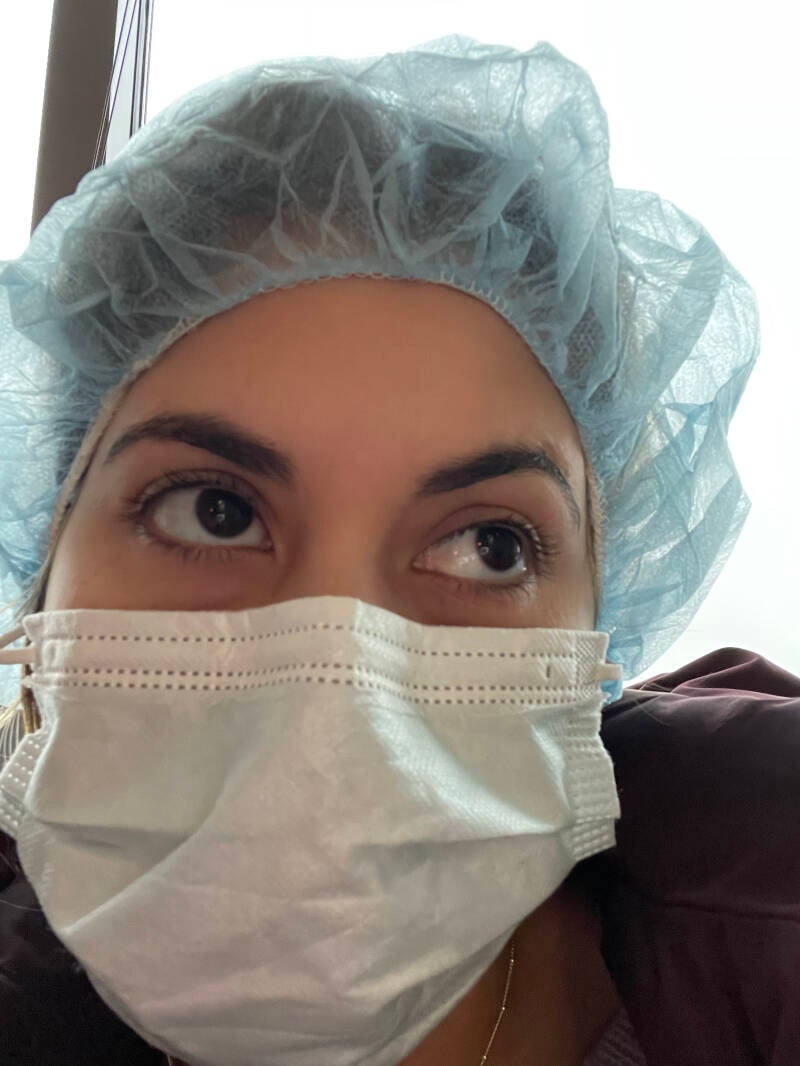
Useful Information:
Nobody is going to fight for you in that doctor's office the way you will. And when you're dealing with something like CRPS, that fight is real. I had to push hard to get the right diagnosis and I know I'm not alone in that. So here's what actually helped me.
Do your research before every appointment. Walk in knowing what you want to talk about. You have limited time with your doctor and it goes fast. If you show up prepared with specific questions and information you've found, you are way more likely to be taken seriously and walk out with actual answers instead of a brush off.
Keep a pain journal. I cannot stress this enough. Write down your pain levels, your triggers, what makes it better, what makes it worse, and how it's affecting your daily life. Doctors respond to patterns and data. When you can show them a record instead of just telling them you're in pain, it changes the conversation.
Record or take notes during your appointments. You are not going to remember everything that gets said, especially when you're in pain and stressed. Use your phone to take notes or record if your doctor is okay with it. You can go back and listen later when your brain isn't in survival mode.
Ask for second opinions and then ask for more. If a doctor isn't listening, find another one. You are not being difficult. You are being your own best advocate and there is absolutely nothing wrong with that.
You know your body better than anyone in that room. Don't let anyone make you feel otherwise.
Some Helpful Resources:
https://www.ninds.nih.gov/health-information/disorders/complex-regional-pain-syndrome
https://www.pennmedicine.org/conditions/complex-regional-pain-syndrome
*Always seek your primary doctor/specialist*
What's POTS?
POTS stands for Postural Orthostatic Tachycardia Syndrome, and if you've never heard of it, you're not alone. It's a dysfunction of the autonomic nervous system, the part of your body that regulates things you never have to think about, like your heart rate and blood pressure. For people with POTS, something as simple as standing up causes the heart rate to spike abnormally, and that triggers a whole chain reaction.
Getting diagnosed requires a tilt table test where your heart rate and blood pressure are monitored as you move from lying down to standing upright. It sounds straightforward but for most of us the road to that test was anything but.
What makes POTS especially tricky is that it often develops after a major event — a pregnancy, surgery, trauma, or a viral illness. An estimated one to three million people in the US are living with it, and yet so many go years without answers, feeling dismissed, confused, and honestly just exhausted from trying to explain something that most people have never even heard of.
Living with POTS may look like:
While there isn't a cure for POTS, a combination of medications and lifestyle adjustments can significantly help in managing its symptoms and enhancing the overall quality of life. Sharing my personal experiences with POTS is a way to connect with others who might be facing similar challenges. I hope that by understanding the realities of this condition and the strategies I've employed, you can find inspiration and practical advice to keep moving forward, even when things feel overwhelmingly difficult.
Useful Resources for More Information:
https://www.ninds.nih.gov/health-information/disorders/postural-tachycardia-syndrome-pots
https://www.dysautonomiainternational.org/page.php?ID=30
*Always seek your primary doctor/specialist*
What's TBI?
A TBI, or traumatic brain injury, is exactly what it sounds like. It happens when an outside force, like a bump, blow, or jolt to the head or body, disrupts normal brain function. You don't have to lose consciousness for it to count, and it doesn't always show up on a scan. That's part of what makes it so easy to miss.
There are two main types. A penetrating TBI is when something physically enters the brain. A non-penetrating TBI, which is the more common one, is caused by a force strong enough to move the brain inside the skull, like what happens in a car accident, a fall, or a sports injury.
Some TBIs cause immediate damage, while others develop gradually over hours, days, or weeks after the initial injury. That second kind is the sneaky one. It's the one that can go undetected for years while you're out here wondering why everything feels harder than it used to.
Symptoms vary but commonly include memory problems, difficulty concentrating, slurred speech, mood changes, fatigue, anxiety, depression, and sensitivity to light or sound. For a lot of people, those symptoms get written off as stress, burnout, or just not trying hard enough. That's exactly what happened to me.
Research shows that up to 56% of TBIs go undetected in the emergency room, with some studies putting that number as high as 80%. So if something has felt off since a head injury and nobody has given you answers yet, trust that feeling. Keep pushing.
Living with a TBI may look like:
Living with a TBI that went untreated for as long as mine did means I had to figure out a lot of things the hard way. And even after starting treatment, life didn't just snap back to normal. It's been a process. A slow, sometimes frustrating, sometimes actually kind of beautiful process of learning how my brain works now and what it needs from me.
Some days are fine. Some days the brain fog is so thick I'll be mid-sentence and completely lose the word I was looking for. I used to speak English and Spanish interchangeably without even thinking about it. At my worst I was losing words in both languages at the same time. That is a specific kind of terrifying that I don't wish on anyone.
What I've learned is that my brain has limits now, and fighting those limits does not work. Pushing through when I'm already depleted doesn't make me stronger; it just makes the next day worse. So I had to completely change the way I approach things, especially when it comes to studying and work.
I gave myself a strict schedule, and I actually stick to it. Not because I'm rigid but because my brain does better with structure and predictability. Knowing what's coming means it doesn't have to work as hard to adjust. When I'm too foggy to concentrate, I stop. Not after ten more minutes. I stop. Because forcing information into a brain that has nothing left to receive it is just wasting time and energy I don't have.
Rest is NOT laziness. I had to say that to myself so many times before I actually believed it. Rest is how my brain heals. Every time I skip it, I pay for it.
The emotional side of it is its own thing entirely. TBI affects mood, and that's not a personality flaw; it's a medical reality. Frustration, irritability, anxiety, and depression are all recognized parts of TBI. There were stretches where I genuinely didn't feel like myself, and I didn't understand why. Having a name for it helped. Having a therapist and the neurologist helped even more.
Useful Information:
When managing symptoms day to day, pay attention to your triggers. For me, it's overdoing it, not sleeping enough, and skipping meals. When those three things line up, my symptoms get significantly worse. Figure out your pattern. It exists, you just have to watch for it. Treatment for TBI often focuses on symptom relief and brain rest, which means actively protecting your brain from overload, not just powering through. Give yourself permission to do that.
On advocating for yourself with doctors: come prepared. Write your symptoms down before appointments because brain fog will make you forget half of them the moment you walk in. Be specific about when things started, how often they happen, and how they affect your daily life. If a doctor dismisses you, find another one. You know your body. A condition being invisible does not make it fake, and you should never have to convince someone who is supposed to help you that what you're experiencing is real.
On the emotional and mental load: this is heavy. Living with a brain injury while also trying to maintain your life, your relationships, and your goals is genuinely a lot. Give yourself grace for the days that are hard. Grief is a normal part of this because you might be grieving a version of yourself that functioned differently before. That grief is valid. Therapy helped me more than I expected once I found the right person. Having someone help you process what's happening mentally, not just physically, makes a real difference.
And if you're reading this because someone you love has a TBI, believe them. That's the most important thing. Just believe them.
Some Helpful Resources:
https://www.ninds.nih.gov/health-information/disorders/traumatic-brain-injury-tbi
https://www.cdc.gov/traumatic-brain-injury/index.html
https://www.hopkinsmedicine.org/health/conditions-and-diseases/traumatic-brain-injury
*Always seek your primary doctor/specialist*